Alzheimer’s Disease: From Earlier Diagnosis to Deeper Molecular Understanding
Earlier diagnosis is changing the Alzheimer’s landscape. But detection is only part of the challenge.



Receive the same data that helps me to write an article in just a week!
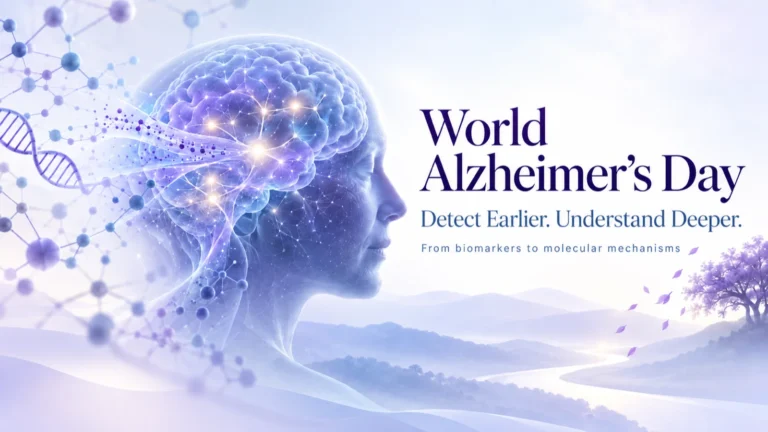
Earlier diagnosis is changing the Alzheimer’s landscape. But detection is only part of the challenge.

Why resistance can emerge through interconnected changes in receptors, signalling, transcription, metabolism and the tumour microenvironment.

Written by: You have probably seen some version of this before. A gene signature looks convincing in one cohort and then starts to lose its power in another. The prognostic signal becomes weaker. The diagnostic classification becomes less reliable. Patient groups that separated nicely before no longer separate so clearly….

Written by: The Missing Question in Gene Expression Analysis: Imagine sitting in a concert hall as a symphony orchestra plays.Suddenly the music shifts — violins surge, brass intensifies, percussion accelerates. Dozens of instruments change at once. You could carefully record which instruments became louder or quieter. But that would not…
Written by: Introduction In our previous exploration, we framed aging as a breakdown of gene regulatory networks and highlighted transcription factors like FOXO3 as master regulators of exceptional longevity. We also suggested that systems biology could reveal upstream “command centers” of aging. Here, we extend that approach using the Genome…
Written by: Huntington’s Disease (HD) remains one of the most challenging frontiers in neurology. While we have known for decades that the disease is caused by a CAG repeat expansion in the huntingtin (HTT) gene that leads to the production of mutant huntingtin protein, which ultimately causes progressive neurodegeneration. Yet,…
Written by: A Regulatory View on Longevity, Epigenetic Reprogramming, FOXO3, and Human Progeroid Syndromes For most of human history, aging was treated as fate. Wrinkles, frailty, declining resilience — all seen as unavoidable consequences of time. But what if aging is not primarily about broken parts? What if it is…

Written by: Introduction Glioblastoma (GBM) is the archetype of an aggressive, adaptive human cancer: genomically chaotic, spatially heterogeneous, tightly wired to a suppressive brain microenvironment, and—despite decades of study—still lethal for most patients. Under the 2021 WHO CNS classification, the name “glioblastoma” is now reserved for IDH-wildtype diffuse astrocytic tumors…

Written by: Introduction Aging is a universal biological process, yet the reasons why some individuals live significantly longer and healthier lives have long puzzled scientists. Among the genes linked to exceptional longevity, FOXO3 consistently stands out as one of the most influential “master controllers” of cellular resilience. This single transcription…
Written by: Introduction Glioblastoma (GBM) is the most common, aggressive, and lethal form of brain cancer in adults — a Grade IV glioma that arises from the brain’s own supportive glial cells. Even when patients receive the most intensive treatment available — surgery to remove as much tumor as possible,…
End of content
End of content