Biggest SAR base trained on over 1,600,000 compounds with known biological activities (over 5,000,000 structure-activity pairs)
Wide spectrum of biological activities over 8,500 terms (pharmacotherapeutic effects, biochemical mechanisms, toxicity, metabolic effect)
High accuracy average accuracy of prediction for the whole PASS training set is 96%
Mechanisms of drug action deep hierarchy based on relationships between biological activities, drug-drug interactions and multiple targeting of chemical compounds.
Locally installed on your Windows computer
Fast analyses library of hundreds thousand of compounds in a minute on your laptop
GUSAR
Create quantitative models on structure-activity (structure-property) relationships
Your own library trained on your own library of compounds with quantitative activity
Highly specific constructs highly specific models
Toxicity models precomputed models for drug toxicity in mice and rat as well as antitargets.
PASS with PharmaExpert
Compute biological activity for chemical compounds using SAR (structure-activity relationship) approach
Introduction
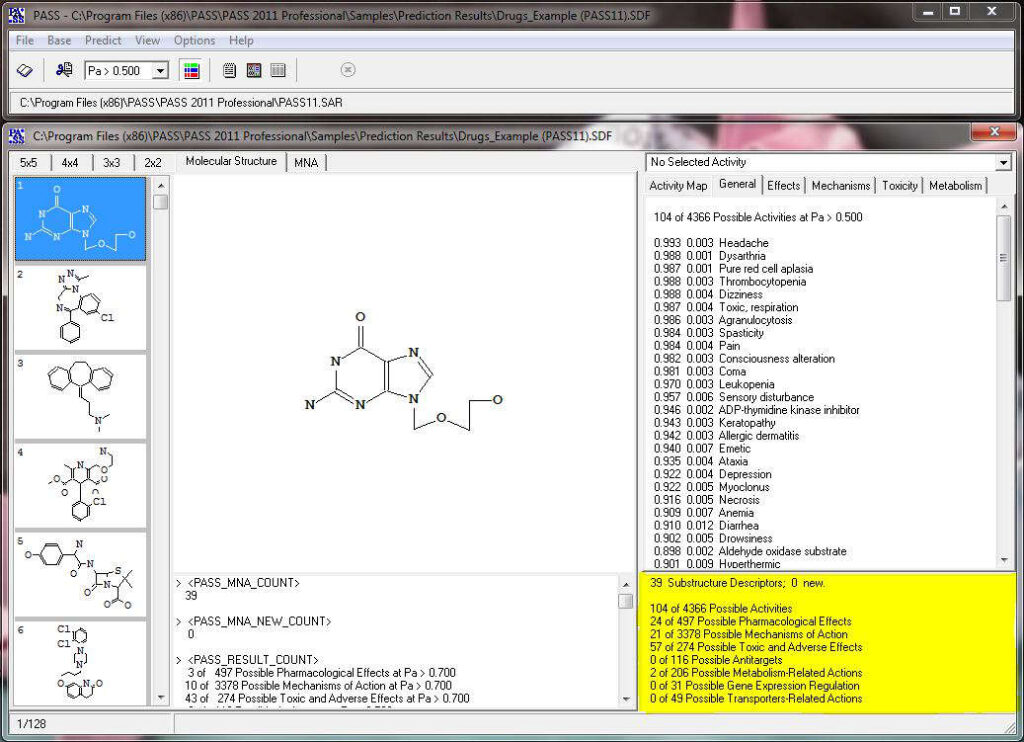
The acronym PASS stands for Prediction of Activity Spectra for Substances. Using structural formula of a drug-like substance as an input, one obtains its estimated biological activity profile as an output. The predicted biological activity list includes the names of the probable activities with two probabilities: Pa – likelihood of belonging to the class of “Actives” and Pi – likelihood of belonging to the class of “Inactives”. By default, all activities with Pa>Pi are considered as probable; however, depending on the particular tasks, the user may choose any other cutoff for selecting the probable “Actives”.
PASS has been well accepted by the research community, and is now actively used in the field of medicinal chemistry, by both academic organizations and pharma companies. There are over 1,200 publications described PASS approach and its applications. Overview on some papers is provided here.
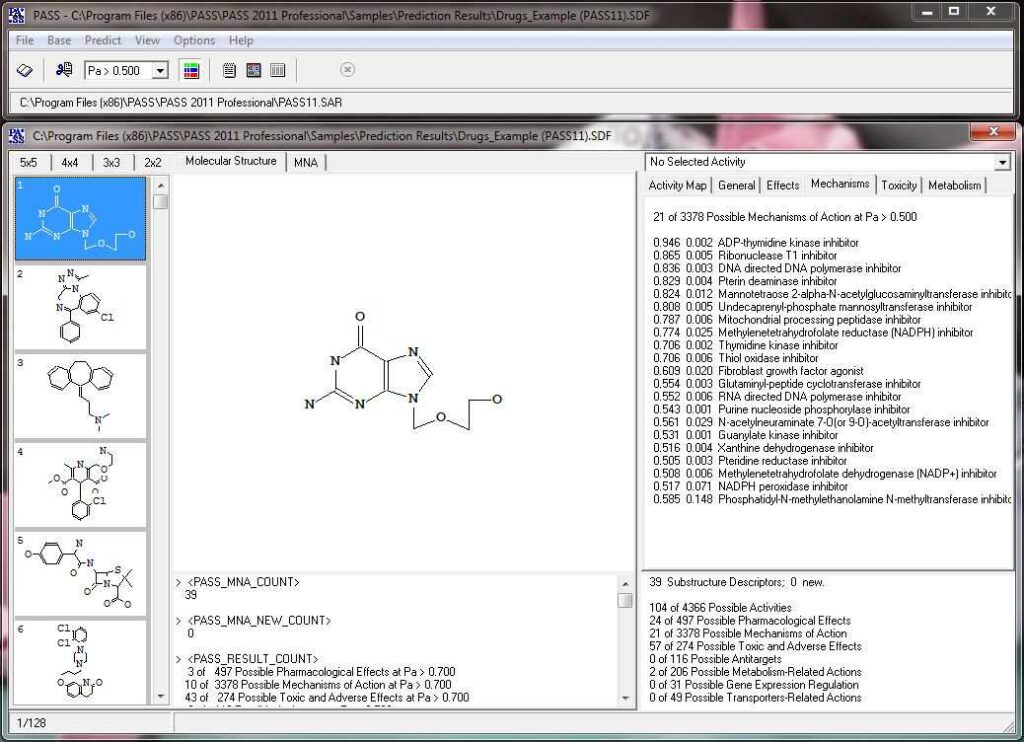
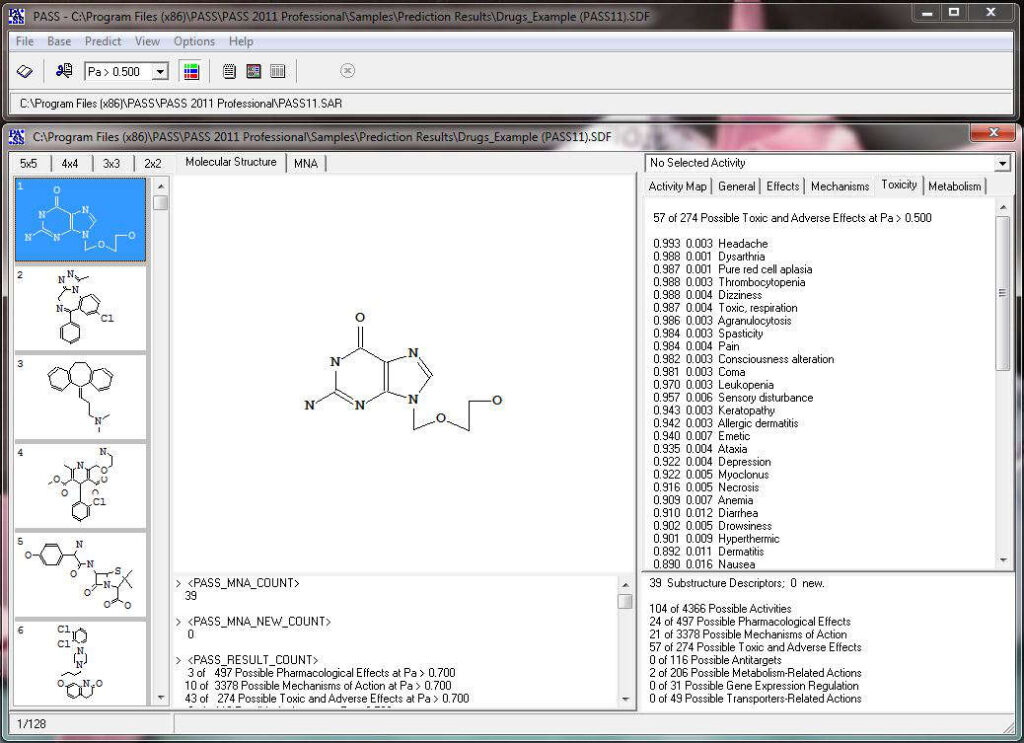
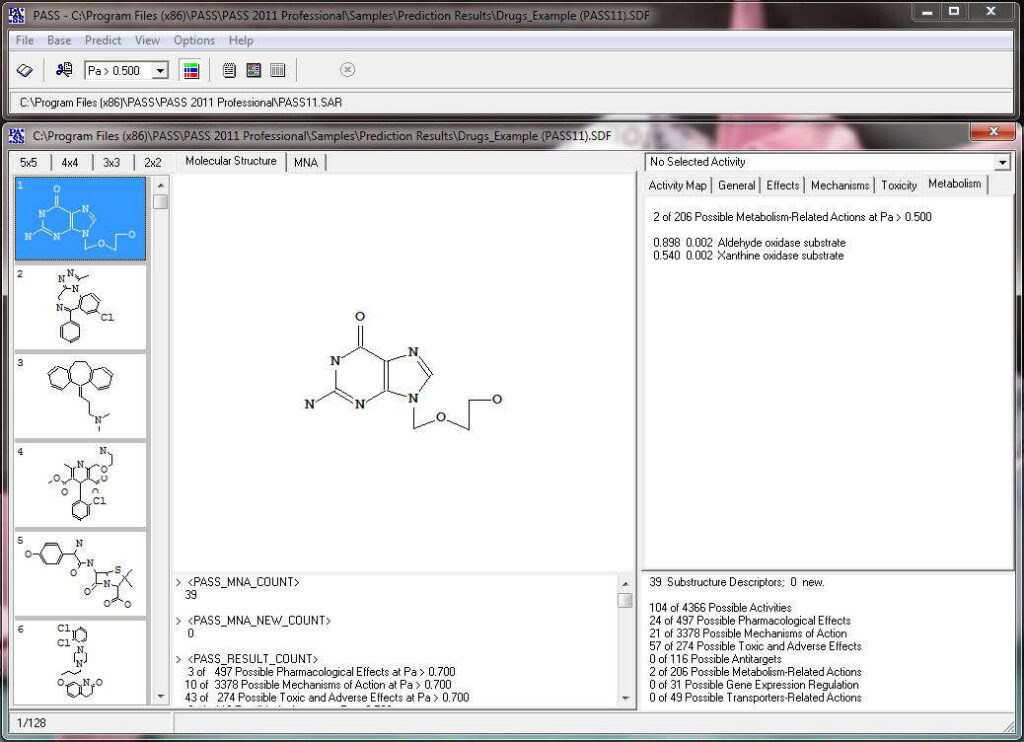
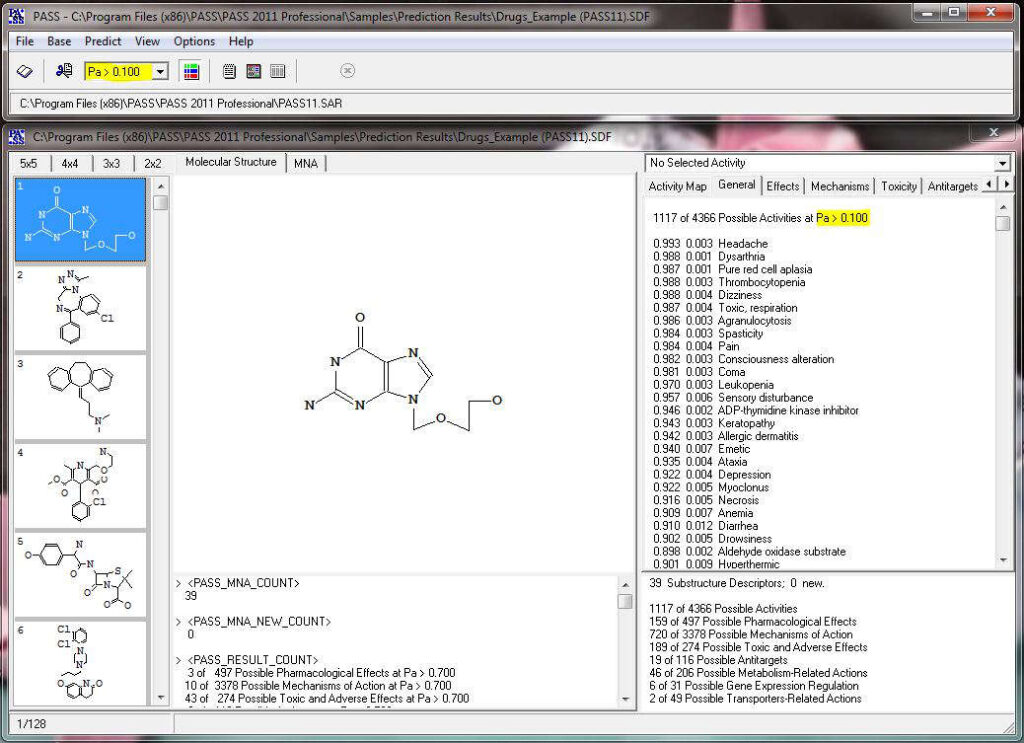
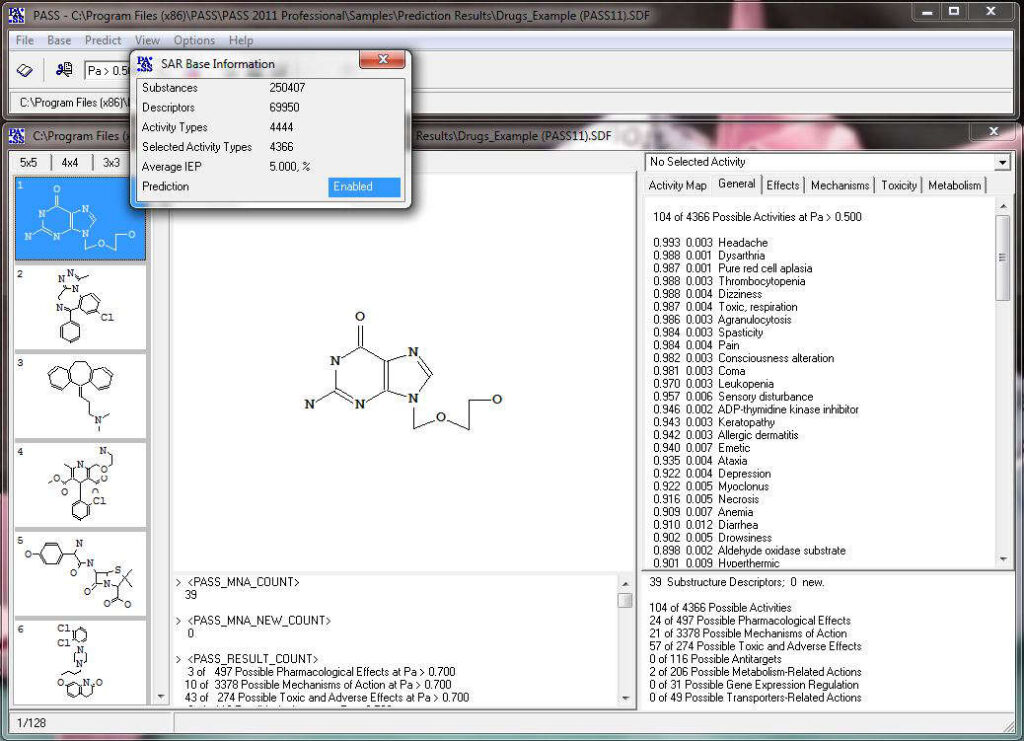
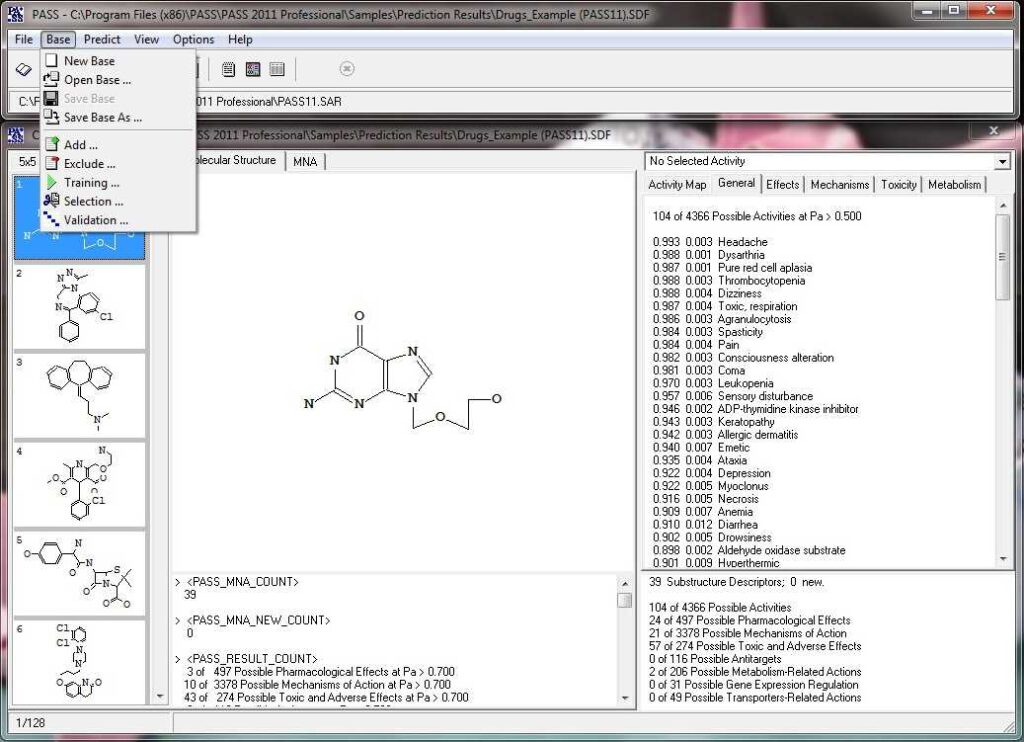
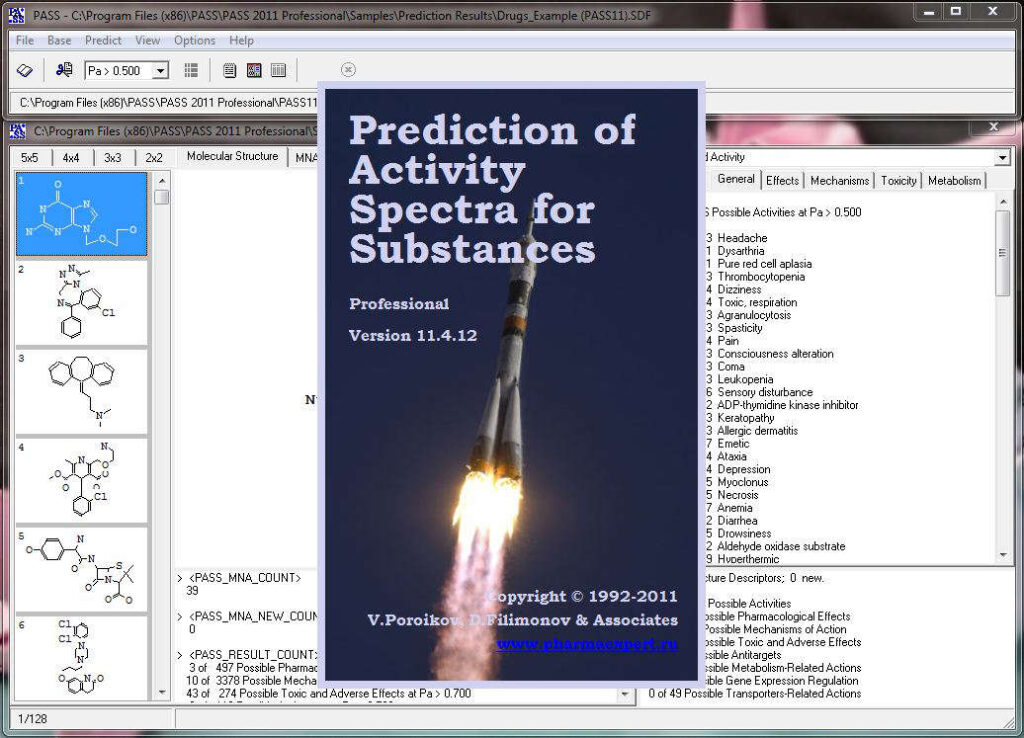
Here we show how to operate the basic interface of PASS.
Activity prediction for a chemical substance by PASS
The slide show demonstrating the look-and-feel of PASS can be found here as well as on our Facebook site. A particularly useful tool to analyze and utilize PASS results further is PharmaExpert.
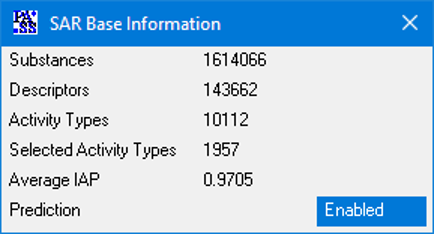
Current PASS statistics
PASS 2022 SAR Base is based on the information about structure-activity relationships of 1,614,066 substances; the total number of experimentally determined pairwise structure-activity records is 5,174,855. 8,565 biological activities can be predicted with average accuracy about 0.93; by default, 1,957 activities are predicted with average accuracy 0.97.
PASS features and applications
Main PASS features
Several thousand biological activities are predicted simultaneously, including: mechanisms of action, pharmacological effects, toxic and side effects, interaction with antitargets, interaction with drug metabolizing enzymes (inhibition, induction, interaction as a substrate), interaction with transporter protein (inhibition, stimulation, interaction as a substrate), changing gene expression of individual genes (increase, decrease). Due to such extensive analysis, the general pharmacological potential of molecules under study is disclosed.
The user may select a particular pharmacotherapeutic field or a certain set of analyzed activities relevant to the purpose of the study. Such selection facilitates the analysis of the output information and reduce the computation time, which is particularly important in case of large chemical libraries.
Algorithm of prediction is statistically robust with respect to the incompleteness of the data in the training set. Since no one biologically active compound is tested against all known biological activities, it is necessary to obtain the best possible estimations even using the imperfect information.
The prediction is based on the structural formula of the compound that allows one to apply it to the virtual structures.
Evaluation of the pharmaceutical substances’ action on many pharmacological targets to identify the hidden pharmacological potential of the launched pharmaceuticals, provides the ideas regarding possible drug repurposing.
Prediction of the potential averse/toxic effects of drug-like compounds leads to their filtering out at the early stages of research.
Re-training of the program using the customer’s training set lead to unique proprietary SAR bases creation, which can be used in house for further predictions.
High rate of computation allows efficient multitarget virtual screening of large chemical libraries containing many millions structural formulae of drug-like compounds.
PASS applications
Medicinal chemistry
Computational chemistry
Drug discovery / drug development
Drug repositioning
Chemical toxicity
Safety assessment
Pharmacogenomics, chemogenomics
SAR (qualitative structure-activity relationship)
Natural compound effects
Translational research / translational medicine
PASS packages
PASS Standard Standard software package includes the standard SAR Base (Structure-Activity Relationship knowledgebase). Currently, standard version of PASS can predict 8,565 biological activities (1,957 activities are predicted by default).Depending on the particular purposes, the user may include into the predictable activity list any of the 8,565 activity types using the “Selection” procedure.
PASS Refined PASS Refined package provides all functions of PASS Standard and can predict 1,957 biological activities that are the most topical.
PASS Professional PASS Professional package provides all functions of PASS Standard and the additional options to create, train and validate your proprietary SAR Base. With this package, you could make your own and unique SAR Base, and use it for further predictions in house on the exclusive basis. You may also add some additional data on structure-activity relationships to the standard SAR Base, and re-train the program to obtain the updated SAR Base. Thus, locally you would have a unique variant of PASS.
PASS Light With PASS Light, you can create, train and validate your proprietary SAR base, and use it for further predictions. The standard SAR Base is not included.
PASS customized According to your potential focus on particular types of biological activities, a customized version of PASS can be prepared, which can predict a restricted number of activities as per your selection. The command line utilities PASS 2022 to CSV, PASS 2022 to SDF, and PASS 2022 to TXT for use in pipelines are also available.
PASS + PharmaExpert package Any of the product PASS Standard, PASS Refined, PASS Professional, PASS Light or PASS customized, can be ordered in a package with PharmaExpert.
How PASS (Prediction of Activity Spectra for Substances) works?
PASS uses a structural formula of a drug-like substance as an input and computes its estimated biological activity profile (or spectrum) as an output. The predicted biological activity list includes the names of the probable activities with two probabilities: Pa – the likelihood of belonging to the class of “Actives” and Pi – the likelihood of belonging to the class of “Inactives”.
Main PASS features
BIOLOGICAL ACTIVITY Biological activity is the result of a chemical compound’s interaction with biological objects. It depends on the characteristics of the compound (structure of molecule), the biological object (kind, sex, age, etc.), details of the exposure (route of administration, dosage), and peculiarities of the experimental conditions. In PASS, biological activities are described qualitatively («active» or «inactive»)
BIOLOGICAL ACTIVITY SPECTRUM The Biological Activity Spectrum of a chemical compound is the set of different types of biological activity that reflect the results of the compound’s interaction with various biological entities. It represents the “intrinsic” property of a compound depending only on its chemical structure. Though this may be a generalization, it provides the possibility for combining information from many different sources in the same training set, which is necessary because no one particular publication comprehensively covers all the various facets of the biological action of a compound.
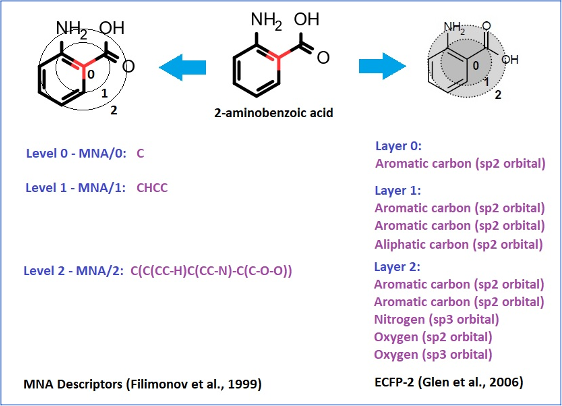
CHEMICAL STRUCTURE REPRESENTATION The 2D structural formulae of organic compound were chosen as the basis for the description of chemical structures, because this is the only information available at the early stage of research (compounds may only be designed but not synthesized yet). The structure descriptors we use, which we call «Multilevel Neighborhoods of Atoms» (MNA), were specifically designed for chemical structure representation for SAR analysis realized in PASS and similar approaches (Filimonov D. et al., 1999). LINK
Extended Connectivity Fingerprints (ECFP), which were developed later (Glen R.C. et al., 2006), are based on the same idea as MNA descriptors:
MNA descriptors, unlike ECFP, preserve the connectivity between atoms of different layers in the form of a nested bracket structure. They are based on the molecular structure representation, which includes all hydrogen atoms according to the valences and charges of atoms and does not specify bond types. Therefore, they inherently include the information about the type of hybridization of atomic orbitals.
EQUIVALENT STRUCTURES The chemical compounds are considered equivalent in PASS if their molecular structures have the same MNA descriptors set. Since MNA descriptors do not represent the stereochemical peculiarities of a molecule, structures that only differ by stereochemistry are formally considered equivalent.
SAR BASE The SAR Base contains vocabularies of MNA descriptors and activity names, the database of the substances’ structures represented by MNA descriptors, their biological activity spectrum, and data on the structure-activity relationships (SAR). Unfortunately, it is currently impossible to collect sufficiently large numbers of active compounds for all activities from available sources. This is why some activity types are represented in the general PASS training set by more than 300,000 drug-like compounds, while some others are only represented by a few ones. The supplied with PASS SAR Bases consists of the substances with at list one known activity. PASS 2022 SAR Base is based on the information about structure-activity relationships obtained with an in-house training set of more than 1,614,066 compounds with 10,112 known biological activities. This training set is continuously curated and expanded. SAR Base can also be replaced by an exclusive knowledgebase, which can be created using in-house data. SAR Base together with the user-defined constraints of biological activities of interest and relevant parameters provides PASS the starting point for the computational prediction. More detailed description of PASS method is available in several publications, for instance in the paper: Filimonov et al., 2014. LINK (PDF file may be obtained on request).
Key features of PASS 2022
PASS training set
The general PASS training set was corrected and extended; thus, PASS 2022 SAR Base includes 1,614,066 (1,368,353 in PASS 2020) drugs, drug-candidates, pharmaceutical agents and chemical probes, as well as compounds for which specific toxicity information is known.
Biological activities list
The entire activity list includes 10,112 terms describing biological activities (9,942 in PASS 2020). About two hundred novel biological activities were added including: Antiviral (Coronavirus), Antiviral (SARS coronavirus), 3C-Like protease (SARS coronavirus) inhibitor, Papain-like protease (SARS coronavirus) inhibitor.
Pairwise structure-activity
In PASS 2022 the total number of pairwise structure-activity records is 5,174,855 (4,288,195 in PASS 2020), with an average of 512 compounds per activity and 3.2 activities per compound.
Predictable activity types
The number of predictable activity types is 8,565, and 1,957 activity types are in the recommended activity list. The average invariant accuracy of prediction (IAP) exceeded 0.93 for all 8,565 predictable activities, and is over 0.97 for the recommended activities. Depending on the particular purpose, the user may include into the predictable activity list any of the 8,565 activity types using the “Selection” procedure.
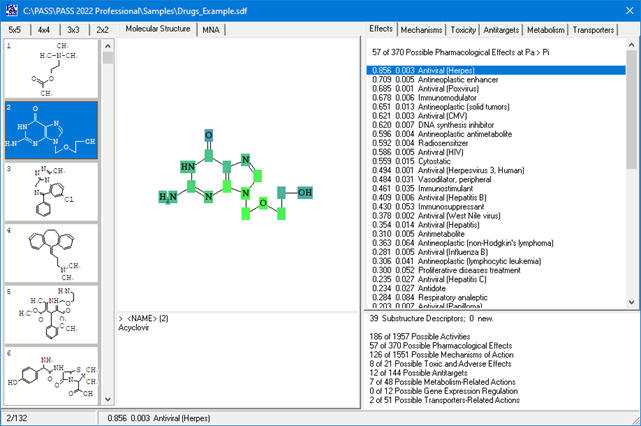
In PASS 2022, the MNA descriptors (for prediction of activity spectra or for adding substances to SAR Base) are generated if structure corresponds to the following criteria:
each of the atoms in a molecule must be presented by atom symbol from the periodic table. Symbols of unspecified atom A, Q, *, or R group labels are not allowed;
each of the bonds in a molecule must be covalent bond presented by single, double or triple bond types only.
All other limitations on the structural formulae implemented in the previous PASS versions (only one uncharged component, minimum three carbon atoms in the structure, MW<1,250) are not applied anymore.
If the structure does not correspond to these criteria or the input data contains any other errors, a message about the first critical error will be received.
For a multi-component structure, only the largest component (with the largest number of heavy atoms) is taken into account.
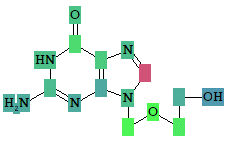
Based on the prediction results, you can evaluate the contribution of each of the atoms of the structure to the estimated biological activity. Select the desired biological activity in the predicted activity spectra by clicking on it; then, each of the atoms of the structure will be colored according to the following scheme:
Light Green Pa = 1, Pi = 0 (atom promotes activity)
Light Red Pa = 0, Pi = 1 (atom promotes inactivity)
Light Blue Pa = 0, Pi = 0 (atom does not generate any signal)
Grey Pa = 0.33, Pi = 0.33 (atom equivocal for weak signal)
Lagunin A, Stepanchikova A, Filimonov D, Poroikov V. PASS: prediction of activity spectra for biologically active substances. Bioinformatics. 2000 Aug;16(8):747-8. Link
Here we show how to operate the basic interface of PASS.
Key features of PharmaExpert
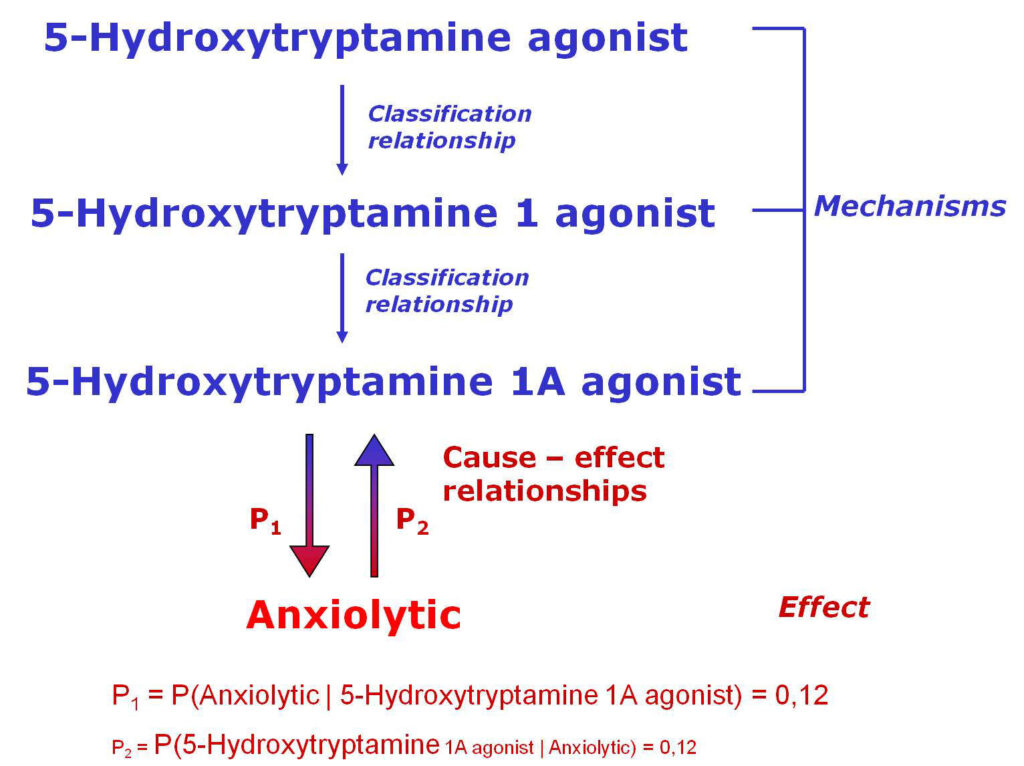
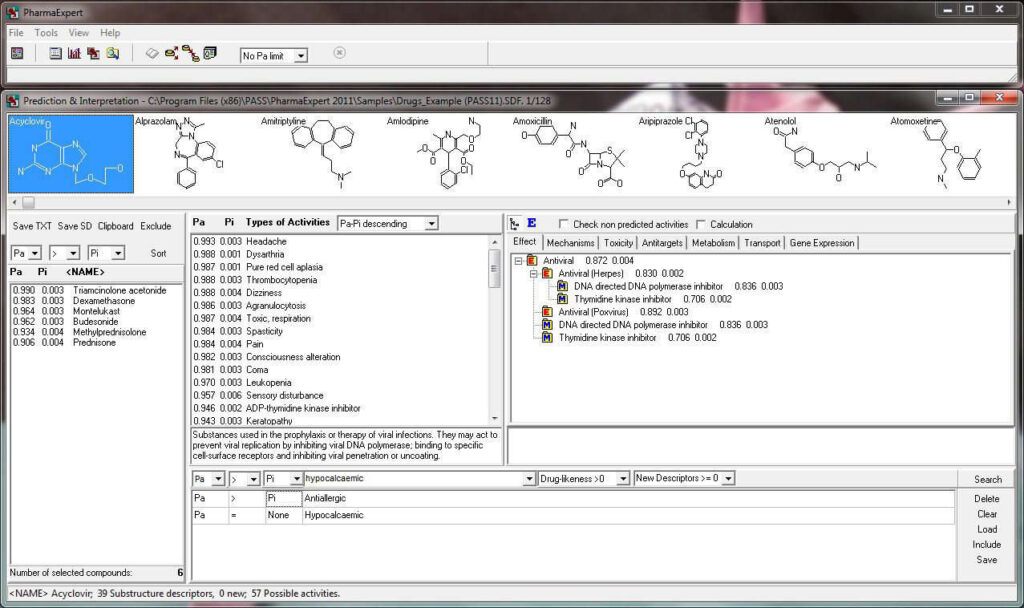
PharmaExpert is an expert system taking into account the known relationships between pharmacotherapeutic effects and mechanisms of action of biologically active substances.
Fields of application: Analysis of the cause-effect relationships between the biological activities, estimation of possible positive and negative pharmacokinetic and pharmacodynamic drug-drug interactions, selection of compounds with the needed activity spectra predicted by PASS, identification of compounds with multiple mechanisms of particular pharmacological action.
PharmaExpert is designed to visualize and to analyze the prediction results of PASS and GUSAR software. It provides the following functions:
reading the SD files containing information about the structures of organic compounds and prediction results of their spectra of biological activity provided by PASS, as well as the prediction results of (Q)SAR models of GUSAR;
visualization of relationships between the predicted biological activities based on the known data about the causal relationships between them, and “target-pathway-effect” relationships;
selecting compounds with desired biological activities in one or more SD files;
analysis of possible positive and negative drug-drug interactions for individual pairs of compounds or for all compounds contained in the SD file;
saving identified relationships between the activities and the results of the selection of compounds with desired biological activities in SD or TXT file.
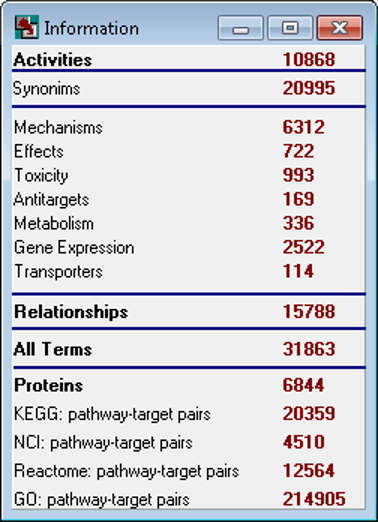
PharmaExpert 2022 contains a knowledgebase with over 15 thousand of known interactions between biological activities, as well as the relationships between proteins, signalling/regulatory pathways (KEGG or Reactome), Gene Ontology biological processes and therapeutic and adverse effects:
All biological activities are divided onto seven types: (1) mechanisms of action; (2) pharmacological effects; (3) toxic and side effects; (4) interaction with antitargets; (5) interaction with drug metabolizing enzymes (inhibition, induction, interaction as a substrate); (6) changing gene expression of individual genes (increase, decrease); (7) interaction with transporter protein (inhibition, stimulation, interaction as a substrate).
Automatic search is provided for compounds acting on any of the mechanisms of action (or simultaneously on several mechanisms of action, up to ten) associated with the therapeutic effect or signalling/regulatory pathway (KEGG or Reactome) and biological process of Gene Ontology.
Analysis of possible drug-drug interactions is performed simultaneously for all seven types of biological activity.
The program contains a knowledgebase with more than 14 thousand of known interactions between biological activities, as well as the relationships between proteins, signalling / regulatory pathways (KEGG, Reactome), Gene Ontology biological processes and therapeutic and adverse effects.
All biological activities are divided onto 7 types: (1) mechanisms of action; (2) pharmacological effects; (3) toxic and side effects; (4) interaction with antitargets; (5) interaction with drug metabolizing enzymes (inhibition, induction, interaction as a substrate); (6) interaction with transporter protein (inhibition, stimulation, interaction as a substrate); (7) changing gene expression of individual genes (increase, decrease).
Analysis of possible drug-drug interactions is performed simultaneously for all 7 types of biological activity.
Automatic search for compounds acting on any of the mechanisms of action (or simultaneously on several mechanisms of action, up to 10) associated with the therapeutic effect or signalling/regulatory pathway (KEGG, Reactome) or biological process of Gene Ontology.
User-friendly interface, fast download speed and analysis of the prediction results of PASS, PASS Affinity and GUSAR
PharmaExpert tool
PharmaExpert is an analyses tool to study the relationships between biological activities, drug-drug interactions and multiple targeting of chemical compounds and selects compounds that have a pre-defined biological activity. It helps answer a question like “How to select the most promising compounds among those known to interact with the selected protein?”